The winners of our 20th, and final competition are below. Scroll down to view judges’ comments. To read previous years winning poems check out our anthologies page.
The 2026 Competition
Winners
1st Prize Kokanee, Spawning – kerry rawlinson, (British Columbia, Canada)
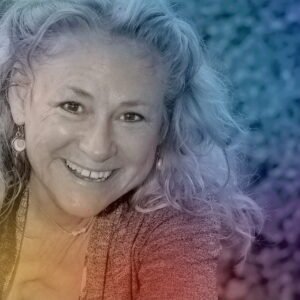
kerry rawlinson is the recipient of awards in the genres of poetry, flash fiction, art and photo art. An autodidact & bloody-minded optimist, she was nibbled into her current shape by a Zambian gestation & Canadian maturation.
After a long career in Architectural Technology & Design whilst raising her family, she now pursues Literature & Art’s Muses around British Columbia’s beautiful Okanagan Valley, her long-suffering husband providing comedy breaks.
kerry misses Zambian storms, avocados & chicolawa, but still wanders barefoot, spending creative time and energy with her beloved grandkids, travelling & visiting snug pubs.
Website – click here.
2nd Prize Refugee Song – Gareth Roberts (Aberystwyth, Wales)
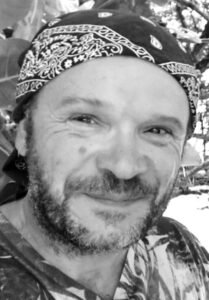 Born and bred in Cardiff, Gareth Alun Roberts has since lived in Aberystwyth, London, Thurso and Newbury – among other places. He has now recently returned to Aberystwyth – because it’s there!
He has had poems published in numerous publications and is a long-standing member of West Berkshire Writers group and also the Aberystwyth Poetry Workshop; he plays guitar and is a songwriter with the rock/soul group Saving Emma.
He has a Facebook page, but is not really sure how to use it; and he has a Twitter account, but doesn’t know why: Gareth doesn’t tweet… or ‘X’, even.
Website – click here.
3rd Prize Gazcue – José Buera (London, UK)
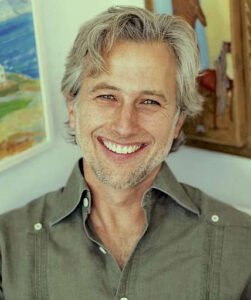 José Buera is a Caribbean/Latinx writer from the Dominican Republic.
An alumni of the London Library’s Emerging Writers Programme, his poetry has been anthologised and appears in the Callaloo, Magma, Poetry Ireland, Wasafiri, and elsewhere.
José is the founder and curator of Empanada Poetry Salon, a bimestrial gathering of diaspora poets amidst their foods.

Highly Commended
(in no particular order)
London Train – Paul Harrington (Cardiff, Wales)
Lawrence – Napier Marten (Salisbury, UK)
Rambling Between My Lover’s Mind And Mine – Kris Hicks (Cardiff, Wales)
first sleep – Mara Adamitz Scrupe (Washington DC, USA)
Morocco – Rufus Mufasa (Pontypridd, Wales)
Terminal Lucidity – Jen Selk (New Brunswick, Canada)
Loved It Here – Peter Surkov (London, UK)
Hairy times – Michael W Thomas (Stourport-on-Severn, UK)
An Autobiography after John Fuller – Louise Walker (London, UK)
Girls Night Out – John Lancaster (Totnes, UK)
Death Of A Miner’s Son – Neil Gower (Lewes, UK)
On Finding Those Photos After You Left Me – Mary Gilonne (Pourrières, France)
Whakahinu Plains – John Gallas (Markfield, UK)
All The Travellers – Damen O’Brien (Wynnum, Australia)
Life Materials – Faiz Ahmad (New Delhi, India)
Margam Crematorium – Phil Meredith (Neath, Wales)
Herculaneum Blue – Pam Job (Wivenhoe, Essex)
To read the winning poems – click here.
Special mentions
In addition, Mick also liked the following poems/poets, who also deserve a mention. In no particular order, they are as follows:
Farrier Years – Eve Jackson
Waiting For Him In Respiratory – Suzanne Herschell
Departure Inside Arrival – Aeman Abbasi
Visiting Hour At St Dymphna’s – Liz Wilson
A Cubist Measure Of Age & Place – Lesley Burt
Visitation – Joyce Schmid
Yellow Period – Adam Oliver
Ward Songs – Vivienne Tregenza
Neither My Father Nor Picasso Gets The Job – Mary Anne Smith Sellen
He Curls Up On The Piano Stool With Ludovico Einaudi – Michaela Brady
We Meet Our Maker In Myriad Ways – Jonathan Greenhause
Old Photographs In A Sack – Frank Lowry
The Emigrant – Jeanne Christie
Portrait Of A Year – Serrina Zou
St Illtyd – Robert Atkins
Dying (With Thanks To Norman Maccaig) – Anthony Powers
Special prize:
My Wales – Rhys Hapgood (aged 10)
Results were announced on our website, Welsh Writers Facebook Group, various blogs and Twitter (X). We have also informed the UK national press, Literature Wales, Pontypridd Observer and associated district newspapers, SW Echo, the Western Mail, BBC Wales, Wales Arts Review, Nation Cymru, Ponty Pages, Storyville Books and RCTCBC as well as many organisations on our mailing list. Special thanks to Mick Evans for judging this year’s competition, our final one, and thanks also to all those who entered, both this year and in the past. We couldn’t have done it without you.
Judge’s Comments
The competition attracted entries from a broad range of countries and cultures. It was a celebration of diverse forms and traditions, an assertion of our humanity. There was an extraordinary range of themes and emotion, from wry humour to profound feelings of loss; love and respect for elders and ancestors; concern for the environment. There were many poems of deep pain and longing. What they all had in common was a deep understanding of poetry, its power to move, and how to achieve effects with exquisite skill. It is inspiring to see all this demonstrated across such a range. It has been humbling to be entrusted with the task, and a huge privilege.
Trying to create a shortlist caused me much concern: I can honestly say distress, for I found so many poems that I wanted to read again and again, such was their beauty and power. I found the judging especially difficult this year, for I felt there was such consistently high quality throughout. Surely something to celebrate. I thank all who submitted work, and can only offer my respect and admiration. Whatever the future holds, it is the Makers who will go on confirming our humanity. More than ever, reading everyone’s work has left me assured of that.
1st KOKANEE, SPAWNING – kerry rawlinson
I chose this poem for the scale of its themes and its potency of language: assured, confident, without strain. This is a contemplation of unsolicited joy in the midst of decay and struggle, like many great poems drawing the universal from the personal. The poet is forced to confront mortality, watching their children, who have become lost in fascination and wonder, and are as yet ignorant of the implications of what is before them.
I find this poem deeply moving in its courage to confront complexities of feeling; its sense of acknowledgement, but not resignation. There is much here about departures and separation, the sense of the universe as blind to us, but the poem constantly finds positives in joy and wonder. Even the sense of separation from the poet’s children, who do not share the sense of mortality confronting them, is seen rather as a blessing.
The poem intrigues the reader in the pulse of its language, the breaks, enjambements, reflecting the struggle for survival in nature. The heartbeat, the drive and urge towards spawning, ironically, for the Kokanee, to death. The mystery of nature and the human situation confronts us in the powerful metaphor. The rivers are ignorant but are also bearers, sanctifiers. In a world where the children too must leave and face the issues of life, honesty is our only protection.
Against all this, the poem inspires because of its language of strength and joy. This meditation on universality is born of a simple event, and the sense of wonder and strangeness in the language grant the poet a kind of peace. This remarkable poem impressed me so much in the extraordinary way it controls language and transforms the experience of a sense of decay and corruption into something transfiguring and redemptive. The knowledge of what this means for the children, fascinated by the colourful, dead kokanee, unaware of the irony, is poignant and moving, and leads to a meditation on the blessings of life. That word is one of the few in the poem with an overtly religious connotation, and is all the more powerful against an ignorant universe.
This poem implies much about separation, isolation, departures: things that are to come. And ultimately the fact of our mortality. The poet’s children must set out on the journey, and it will be one of struggle as they battle to come to terms with emotional and spiritual conflict. There is much that is brutal in the description of the kokanees’ struggle, yet their demise is perceived as wondrous, beautified. The poet questions the nature of the universe –
“do oceans
spit at the land for their suffering – ah but
the kokanee don’t care”
They are lost in the struggle for survival, in the drive of pure instinct. So there is the strong sense of being separated from nature by our self-awareness.
The poet’s skill is consummate, showing the sense of separation created by the response of careless fascination to the dead fish, innocence as yet unlost, untainted. The poet is aware that this state of joy cannot be regained, but can be fleetingly enjoyed as a surrogate experience.
The form and language of this poem are full of strength, muscle, sinew; the unexpected shifts and turns, the struggle to wrest the joys from life, the triumph of wonder. The language excites, sanctifies, regenerates, yet remains controlled; the imagery is natural, in every sense. The universe is blind, yet it bears and sustains. The challenges and emotional complexity of this poem are brought to a triumphant climax, where the rivers “thunder on”. The universe does not care; but though Godless, this feels liberating for, constantly, our world has immense potency to overawe with beauty and wonder.
For the scale of its theme, the drama of its language, for its joyful refusal to despair, I find this a deeply moving and inspiring poem.
2nd REFUGEE SONG – Gareth Roberts
This powerful and dramatic poem conveys so many emotions in vivid ways. Its taut, tense language creates a sense of threat, the urge for survival, and underlying, suppressed trauma. There is an intense feeling of loss, fear, and uncertainty. Everything is held in check, but only just. The language is controlled, at times laconic, always stark. We are never allowed to avert our gaze. The sense of rejection, of despair, of self-loathing inflicted on the poet, and the fact of having survived, create a complex web of emotion. The mystique of the language is a constant.
Song may be lament or celebration: this is both. There is a strong sense of desire, clinging desperately to the old country and its “broken songs”. This is the voice of someone who has lost everything but memories, hope, and voice. Their tongue will chorus survival and futures, in outcry and song. We follow the journey, as much a mental as physical trial, through sections of loss, deprivation, starvation, and fear. Each brings new truths, harsh challenges, but speaks always of courage and determination.
There are so many striking phrases that capture the strangeness and alienation of the journey. The poem is deeply distressing in its ability to make us feel the loss of a homeland, a culture, safe ground. Section by section we move away, “all of it the hard part of letting go” towards “learning new strains for alien tongues”. But there is determination and triumph, for though the poet’s tongue is numbed, it will sing this story. When everything is lost, what remains is bare humanity. The poem’s mood captures this with great skill and control. The poem reaches beyond its overt theme into considerations of the nature of evil – “all the grim sovereignties of the night” and what meaning, if any, religion can have: “All of the gods that have passed through me”. So the poet draws the theme of alienation into a contemplation of the human condition. They have to endure encounters with monsters and the “barbed-wire tongues” of those who name refugees so. This adept use of imagery drives home the way the tongue – language – may be also be abused. We see how self-belief breaks down under the pressure of constant criticism in the repetition, almost a prayer, “I am not the monster”.
The overriding theme is of darkness, setting off secretly at night, into the “heart of darkness”, with all the ambivalence and ambiguity of Conrad’s title. The final section, seed country, again ambiguous, is a sad acceptance of fate, knowing the only true freedom is to be “interred untroubled by emotion”. But this tiny seed will bear a fruit, a tiny flag to bear witness to human suffering.
Trauma and mystery, through the form of chapters of a journey into the unknown, create a kind of odyssey: of monsters, imagined and real, and the trauma is expressed through the poet’s vision of nature distorted by war, “tracer shells”. Ultimately, this is a song of survival of the human spirit. From the drama of the extraordinary opening lines, the tone is sustained, assured. The poet uses fragmentary forms to reflect broken lives, uncertainty. Never didactic, this is a stark, profoundly moving poem that speaks of hope, the consecration of memory; the will to make a future, and bears witness to the power of poetry to transform experience to mythic status. It speaks of the alienation of country from country, of individuals from each other, of the human situation, Everyman, and of the spirit of survival.
3rd GAZCUE – Jose Buera
This beguiling and magical poem achieves remarkable effects and feats of memory. The precision of everyday detail grants power and emotion throughout. We are drawn into a world of memory that is so appealing, so clearly precious. Yet the poem has a carefully crafted use of tenses; we are lost in this world but drawn sorrowfully, painfully back into the present. The poet achieves with superb control something that feels like the loss of Eden. Yet this is not sentimental nostalgia: this is a world of “third-hand Hyundais” “a cast-iron fruit peeler in the hallway”. And we are forced to share the pain of loss in “grandfather’s nightly whiskeys” to “see her again cancer-free”. This is a tour de force of atmosphere and mixed emotions that culminate in the return to the present, of loss, decay, death.
There is such tenderness and reverence for memories in this poem. We are offered pictures of life as though in the present, only to lose them with the shock of realisation. This remarkable poem says much about the power of memory, of how it works, for memory is active in our recollections as the present.
The language is sustained, the imagery gritty, down-to-earth, precisely envisioned. Everyday life is seen reverentially. The poet sees the past as vital, urgent, real. Relationships are described with tenderness and compassion. The dense imagery is almost breathless in its pace at times, at others reflective. The shifts from past to present draw us into a lost world: the opening verse, set in the present tense, we discover later is only a memory, and its loss is full of sorrowful impact. We are immersed in the atmosphere of the colonial past and then in the natural imagery of its decay. This poem takes life in all its colour and shadows, where the past is a precious haunting of the present.
So many poems of deep feeling, originality, and skill were entered. Creating a shortlist required much soul-searching. The variety of themes and forms was a constant cause for admiration; so many gave the power of response that only poetry of the highest order can provide. Among many others, special mention must go to:
London Train for its narrative of yearning and sorrow.
Lawrence was such a strong contender with its potent imagery, its beautiful evocations moving towards a revelation of heartrending loss.
The structure and symbolism, the final vision of Rambling between My Lover’s Mind and Mine, haunt me still.
The power of the language and exquisite use of reference and quotation give immense power to first sleep.
Morocco is an immensely powerful and moving poem.
Terminal Lucidity expresses with total honesty the feelings of someone facing potentially the final demise of a loved one.
Neither my father nor Picasso gets the job deals with the limitations of bureaucracy, with tenderness and humour.
Girls night out is simply heart-rending in its frank and unexpected treatment of the consequences of trauma.
An Autobiography after John Fuller creates a plethora of moments of mystery, resilience, trauma; the richness of human experience. Its final memory is mysterious, joyful, triumphant.
Whakahinu Plains is a wonderful poem about life’s blessings.
Farrier Years for such powerful descriptions.
All these and so many other poems this year deserve special mention for their ability to surprise and delight. I can only express my gratitude and admiration. It has been a pleasure and a privilege to spend this time in the company of such writers.
Mick Evans, August 2026
See also our links page for details of poetry websites in Wales and beyond.